Are Black Olives Keto-Friendly?
Are Black Olives Keto-Friendly? The short and sweet answer is yes! They certainly can be a flavorful part of a keto diet.
In this article, we're going to delve deeper into the nutritional profile of black olives.
We'll break down their carbohydrate content, discuss ways to incorporate them into your keto meal plan, and explore the overall benefits and nutritional value that these tasty morsels bring to the table.
We'll also touch on some keto-compatible alternatives to black olives for those looking for a bit of variety in their diet.
So, if you're a keto dieter with a love for black olives, keep reading to find out how to make the most of these nutrient-packed gems in your meal plan.
TL;DR
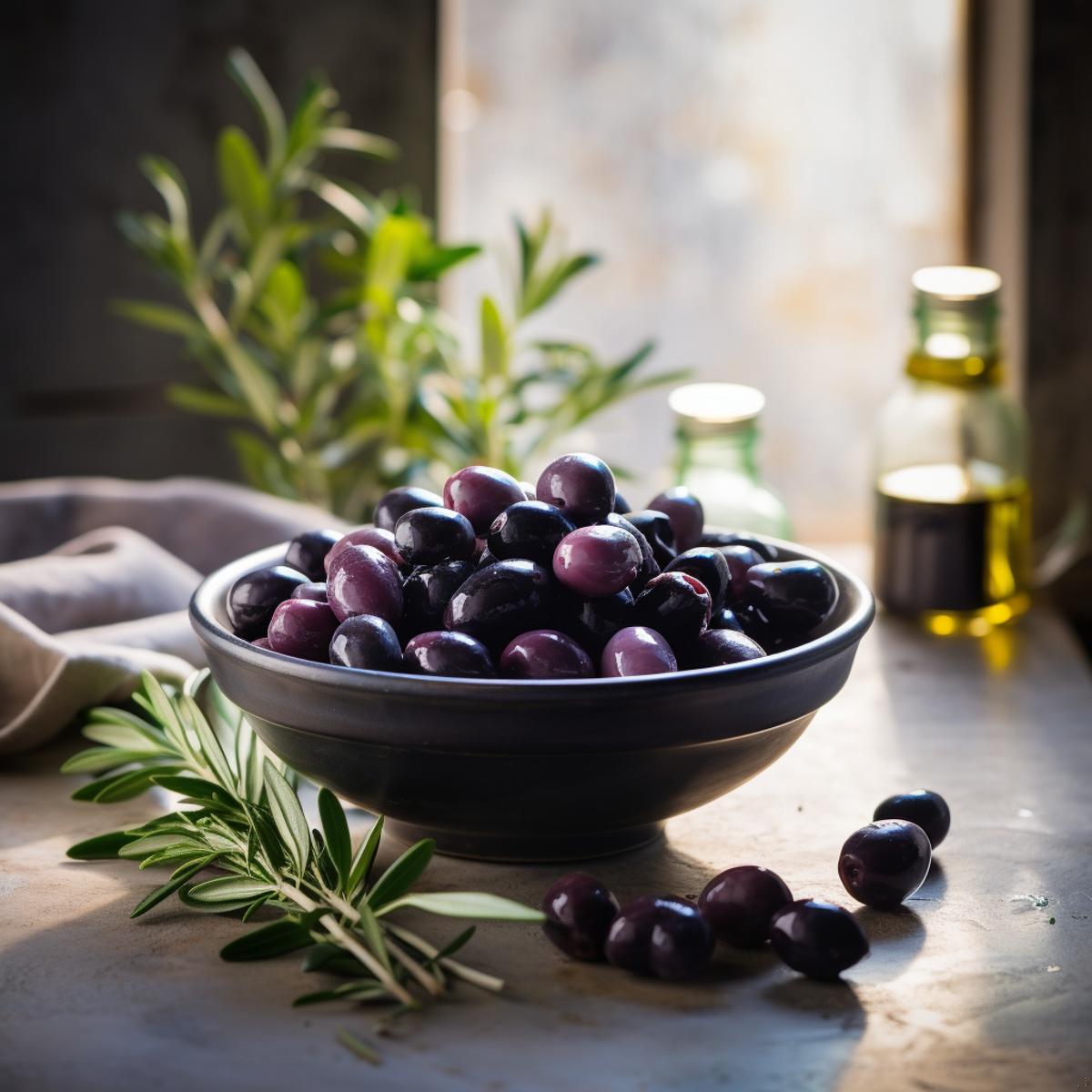
Are Black Olives Keto-Friendly?
Yes, black olives are keto-friendly. The evidence lies in their nutritional profile, as they contain just 4.44g of carbs per 100g serving. This low carbohydrate count makes black olives a suitable addition to a ketogenic diet.
The reason black olives are deemed keto-friendly stems from their carb content. In a ketogenic diet, the aim is to limit daily carb intake, encouraging the body to enter a state of ketosis where it burns fat for energy instead of carbs. With only 4.44g of carbs per 100g, black olives fit well within this dietary framework. Furthermore, when calculating net carbs, which are the carbs that get digested and affect your blood sugar levels, black olives have even less, with 4.44g net carbs per 100g.
Can You Have Black Olives on a Strict Keto Diet?
Indeed, black olives can fit into a strict keto diet. A strict ketogenic diet typically entails consuming less than 20g of carbs per day. Given that black olives contain only 4.44g of carbs per 100g, they can neatly fit into this regime without disrupting the state of ketosis.
It's worth pointing out that some people follow a more liberal approach to keto or a low-carb lifestyle, where they limit their carb intake to 30-50g of net carbs per day. In this case, black olives can be included even more freely.
Carbs In Black Olives
Black olives contain 4.44g net carbs per 100g. Net carbs are the carbohydrates that get digested and impact your blood sugar levels, and they're calculated by subtracting the dietary fiber from the total carbs.
Black Olives Nutrition Facts
A 100g serving of black olives is a bounty of nutrients. It consists of Water (81.96g), Protein (0.84g), Fat (10.68g), and Carbohydrates (6.26g), including dietary Fiber (3.2g) and Sugars (0.54g).
This olive variety is low in Sodium (735mg) and high in Potassium (8mg), making it a good choice for maintaining a healthy balance of electrolytes. Its Calcium (88mg) and Phosphorus (3mg) content aids in bone health.
Black olives are rich in Iron (3.32mg), which helps in the production of red blood cells. They also contain Vitamin A (20µg), important for eyesight, and Vitamin C (0.9mg), known for its immune-boosting properties.
Notably, black olives are loaded with heart-healthy Monounsaturated fats (7.89g) and provide a good dose of Vitamin E (1.65mg), an antioxidant that protects cells from damage.
| Nutrient Name | Amount and Unit per 100g |
|---|---|
| Net Carbs | 4.44g |
| Carbohydrate, by difference | 6.04g |
| Fiber, total dietary | 1.6g |
| Total fats | 10.9g |
| Protein | 0.84g |
| Sodium, Na | 735.0mg |
| Potassium, K | 8.0mg |
| Magnesium, Mg | 4.0mg |
| Calcium, Ca | 88.0mg |
| Vitamin A | 17.0ug |
| Vitamin B-6 | 0.01mg |
| Vitamin C, total ascorbic acid | 0.9mg |
| Vitamin E (alpha-tocopherol) | 1.65mg |
| Vitamin K1 | 1.4ug |
| Copper, Cu | 0.25mg |
| Iron, Fe | 6.28mg |
| Phosphorus, P | 3.0mg |
| Selenium, Se | 0.9ug |
| Zinc, Zn | 0.22mg |
| Beta-carotene | 198.0ug |
| Lutein + zeaxanthin | 510.0ug |
| Thiamin | 0.0mg |
| Niacin | 0.04mg |
| Choline, total | 10.3mg |
| Calories | 116.0kcal |
| Water | 79.99g |
| Fatty acids, total saturated | 2.28g |
| Fatty acids, total monounsaturated | 7.65g |
| Fatty acids, total polyunsaturated | 0.63g |
Health Implications of Black Olives on a Keto Diet
Black olives are not only low in carbs but also packed with essential nutrients. They are a good source of dietary fiber, healthy fats, and vitamins and minerals. For instance, they contain Vitamin A, which supports eye health, Vitamin E, known for its antioxidant properties, and a range of beneficial minerals like iron, calcium, and magnesium.
Incorporating Black Olives into Your Keto Meal Plan
- Add Black Olives to Salads: Black olives make a tasty addition to any salad. Their distinctive flavor can elevate the taste of a simple green salad or a Mediterranean-style salad.
- Use Black Olives in Keto Recipes: Black olives can be integrated into a variety of keto recipes. They can be used in a tapenade, a popular olive spread, or added to keto-friendly pizzas, casseroles, or stews for added flavor.
- Portion Control: Despite their low carb content, it's essential to monitor portion sizes when consuming black olives, as their carbohydrate count can add up. Be mindful of your daily carb limit and adjust your intake of black olives accordingly.
Keto-Compatible Alternatives for Black Olives
- Green Olives: Green olives can serve as an excellent alternative to black olives on a keto diet. They can be used in the same way as black olives, such as in salads, tapenades, or keto-friendly pizzas. Green olives have a similar carb count to black olives, making them a good substitute.
- Avocados: Although quite different in taste, avocados can be used as a keto-friendly substitute for black olives. They can be included in salads or used to make a creamy guacamole. Avocados offer a slightly higher fat content and lower carbohydrate count than black olives, aligning well with the nutritional requirements of a keto diet.
- Pecans: While certainly a different flavor profile, pecans can add a similar crunch and richness to salads and keto dishes. They offer a higher fat content and lower carb count, making them a beneficial addition to a keto diet.
Concluding Thoughts on Black Olives and Keto
Black olives can certainly be a part of a strict keto diet, given their low carb content of 4.44g per 100g. Aside from being keto-friendly, they also boast a range of nutritional benefits. They're rich in beneficial minerals and vitamins and are a good source of healthy fats and dietary fiber.
Incorporating black olives into your keto meal plan can be an enjoyable culinary adventure. They can be added to salads, used in keto recipes, or even munched on as a snack. Just remember to keep an eye on portion sizes and count the carbs from black olives to maintain a successful keto diet.
While black olives are indeed a great addition to a keto diet, don't be afraid to experiment with other keto-friendly alternatives like green olives, avocados, or pecans for variety.
Explore our Is It Keto Knowledge Hub. |
|---|
| Are Kalamata Olives Keto-Friendly |
| Are Green Olives Keto-Friendly |
| Are Olives Keto-Friendly |
Cast Iron Keto's Editorial and Research Standards
Certain rare or exotic food items may not have nutritional profiles in the FoodData Central database. If an exact match is not found in the FoodData Central database, then, the Cast Iron Keto team utilizes a three-prong approach to provide readers with the closest relevant nutritional data, where possible.
First, in the event that nutritional profiles for a rare or exotic food item is not available in the FoodData Central database, we investigate alternative names for that particular food item and use that data, when possible. Second, in cases where no alternate names exist, Cast Iron Keto will use nutritional data for a close relative or similar food item. Finally, if no close relatives or similar items exist, we refrain from publishing nutrient data tables.
When making dietary or health decisions based on FoodData Central's data, we suggest readers consult with a nutritionist or other health experts, particularly if the food in question has a significant role in your diet or if you are using the food item to treat any health disorder(s).
Furthermore, it is important to note that even if a close relative or similar item is used to approximate the nutritional data, different food items can have varying levels of nutrients due to factors such as soil quality, farming practices, and regional differences.
Disclaimer:
The information on this website is only intended to be general summary information for public use, designed for educational purposes only and is not engaged in rendering medical advice or professional services. This information does not replace written law or regulations, nor does it replace professional medical advice, diagnosis, or treatment. If you have questions about a medical condition or are seeking to evaluate the health merits of certain food items for the treatment of any medical condition, you should seek the advice of a doctor or other qualified health professionals.
The views expressed at, or through, Cast Iron Keto are for informational purposes only. Cast Iron Keto cannot guarantee the validity of the information found here. While we use reasonable efforts to include accurate and up-to-date information, we make no warranties as to the accuracy of the content and assume no liability or responsibility for any errors or omissions in the content. All liability with respect to actions taken or not taken based on the contents of this website are hereby expressly disclaimed. The content on this posting is provided "as is;" no representations are made that the content is error-free.