Is Tungrymbai Keto-Friendly?
The ketogenic or 'keto' diet, known for its emphasis on high-fat, low-carb foods, often leaves individuals questioning the suitability of various ingredients, particularly those enriched with cultural significance and unique flavors.
One such delicacy is Tungrymbai, a traditional fermented soybean dish from North East India.
Is Tungrymbai
However, as with many aspects of nutrition, the complete picture is more nuanced.
TL;DR
Is Tungrymbai Keto -Friendly?
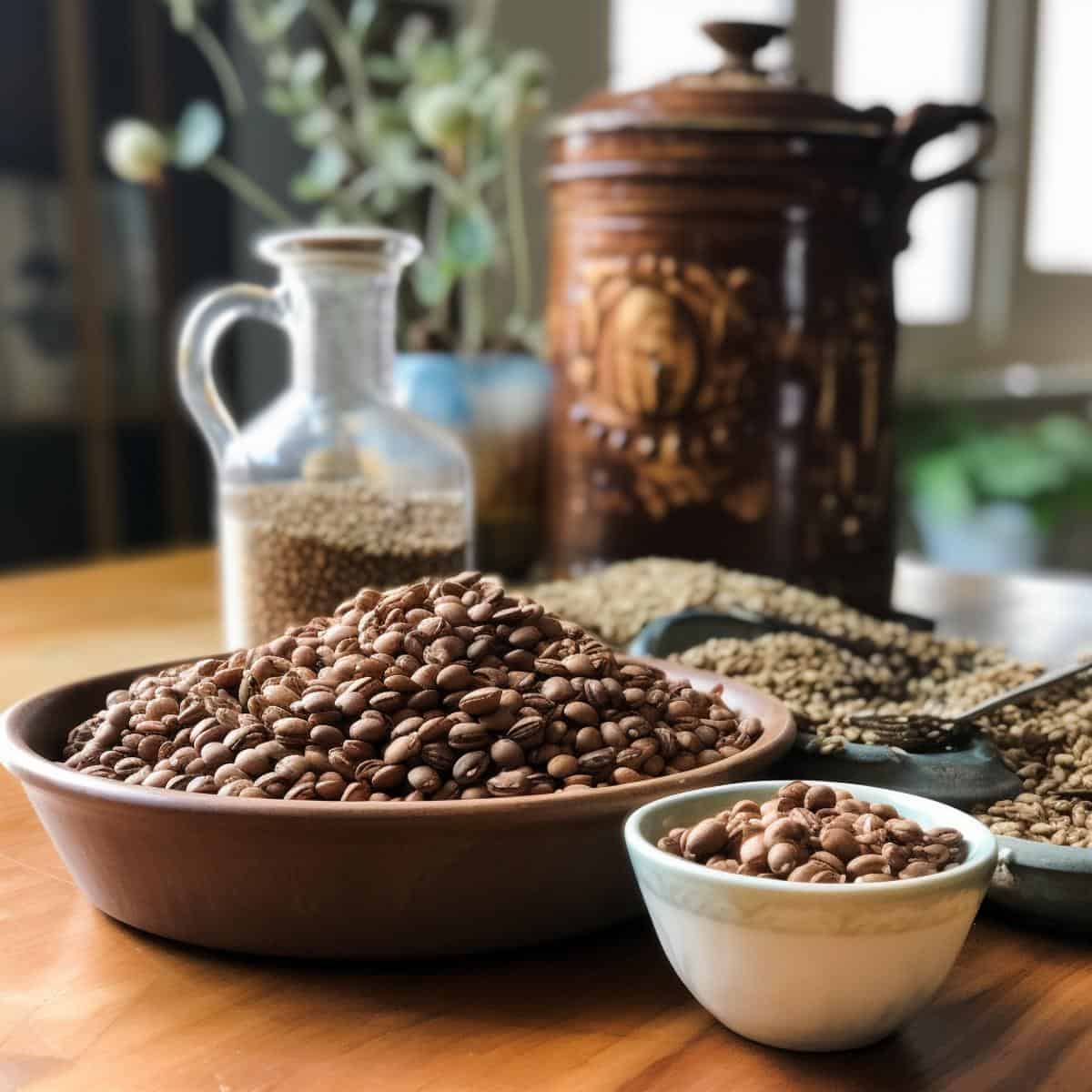
Is Tungrymbai
It's time to get down to the nitty-gritty: Is Tungrymbai
The ketogenic diet relies heavily on a macro-nutrient distribution that encourages high-fat, moderate-protein, and low-carb eating. This dietary approach aims to shift your body's metabolism to use fat as the primary source of energy instead of carbohydrates. Hence, it's crucial to limit your carb intake to maintain ketosis, a metabolic state where your body efficiently burns fat for energy.
Tungrymbai, although a flavorful delicacy, packs about 19.97g net carbs per 100g. This carbohydrate content is relatively high for those adhering to a strict ketogenic diet, which typically limits daily net carb intake to below 50 grams. If you were to consume 100g of Tungrymbai, you'd already be nearing half of your daily net carb allowance. This leaves little room for other foods, potentially hindering your ability to maintain a well-rounded and nutrient-dense ketogenic diet.
Can Tungrymbai be Incorporated into a Strict Keto Diet?
Can Tungrymbai be Incorporated into a Strict
The question of whether Tungrymbai can be incorporated into a strict
Here's why: A strict
For those of us who like to keep track of our macros, there are several tools available to help. Meal planning and macro tracking apps can be a lifesaver. These digital aids can assist you by calculating your daily net carb intake, including those sneaky carbs that you might not have been aware of, like those in Tungrymbai.
However, please remember that every body is unique, and individual responses to different foods can vary. While it might be challenging to incorporate Tungrymbai into a strict
Delving into the Carbohydrate Content of Tungrymbai
Delving into the Carbohydrate Content of Tungrymbai
Now, let's delve deeper into the carbohydrate content of Tungrymbai. As mentioned, Tungrymbai packs a considerable amount of net carbs, with approximately 19.97g per 100g serving. But what exactly do we mean when we say 'net carbs'?
When you follow a
Now, let's imagine a serving of Tungrymbai. Say you decide to include a small amount, around 50g, into one of your meals. This portion would contain nearly 10g net carbs, which accounts for a significant portion of your daily carb allowance on a strict
Nutritional Snapshot of Tungrymbai
Tungrymbai presents a fascinating nutritional profile, endowed with a variety of both macro and micronutrients. For starters, each 100g serving of Tungrymbai contains 19.97g of net carbs, making it a moderate source of energy. It also boasts a total dietary fiber of 5.4g, essential for facilitating digestive health.
Equally important is the protein content, sitting at 12.79g per 100g. This makes Tungrymbai a decent source of protein, vital for muscle growth and repair. The total fat content is 6.01g, contributing to its satiating nature.
In terms of micronutrients, Tungrymbai is rich in Sodium, providing 3728.0mg which is essential for normal cell function. Alongside, you find a fair amount of Potassium, Magnesium, Calcium, and Phosphorus which are all fundamental for various bodily functions, including nerve transmission, muscle contraction, and bone health.
Vitamins are not left out; it showcases a spectrum of vitamins like Vitamin A, B-6, B-12, E, and K1 which are crucial for our immune system, brain health, and bone strength.
Trace elements like Copper, Iron, and Zinc are present, key for blood health and immune system function. Additionally, Tungrymbai contains Beta-carotene, a precursor to Vitamin A, and other B vitamins like Thiamin, Riboflavin, and Niacin which aid in energy production.
Lastly, it carries a modest caloric load of 198.0kcal per 100g, which combined with its water content of 43.02g can aid in maintaining hydration and energy levels.
| Nutrient Name | Amount and Unit per 100g |
|---|---|
| Net Carbs | 19.97g |
| Carbohydrate, by difference | 25.37g |
| Fiber, total dietary | 5.4g |
| Total fats | 6.01g |
| Protein | 12.79g |
| Sodium, Na | 3728.0mg |
| Potassium, K | 210.0mg |
| Magnesium, Mg | 48.0mg |
| Calcium, Ca | 57.0mg |
| Vitamin A | 4.0ug |
| Vitamin B-6 | 0.2mg |
| Vitamin B-12 | 0.08ug |
| Vitamin E (alpha-tocopherol) | 0.01mg |
| Vitamin K1 | 29.3ug |
| Copper, Cu | 0.42mg |
| Iron, Fe | 2.49mg |
| Phosphorus, P | 159.0mg |
| Selenium, Se | 7.0ug |
| Zinc, Zn | 2.56mg |
| Beta-carotene | 52.0ug |
| Thiamin | 0.1mg |
| Riboflavin | 0.23mg |
| Niacin | 0.91mg |
| Folate, total | 19.0ug |
| Choline, total | 72.2mg |
| Calories | 198.0kcal |
| Water | 43.02g |
| Fatty acids, total saturated | 1.02g |
| Fatty acids, total monounsaturated | 1.12g |
| Fatty acids, total polyunsaturated | 2.88g |
'Tungrymbai' was not found in FoodData Central, so nutritional data for 'Miso' was used instead under Cast Iron Keto's editorial and research standards.
Health Implications of Tungrymbai on a Keto Diet
Health Implications of Tungrymbai on a
Before we dive into the health implications of Tungrymbai on a
But let's not forget, Tungrymbai is more than just its carb content. It's a traditional food that brings with it a host of nutritional benefits. Tungrymbai, being a fermented food, can contribute positively to gut health. The process of fermentation enriches it with probiotics, beneficial bacteria that support a healthy gut microbiome. This can, in turn, enhance digestion, boost immunity, and even improve mental health.
Furthermore, Tungrymbai is a good source of protein and provides essential minerals like iron and calcium. These elements play vital roles in our bodies, from supporting muscle and bone health to facilitating oxygen transport in the bloodstream.
Avoiding Tungrymbai in Your Keto Meal Plan
Avoiding Tungrymbai in Your
While Tungrymbai may have its health benefits, its high net carb content could make it a tricky ingredient to handle for those who are adhering to a strict
A well-rounded
Be vigilant about hidden carbs, especially in prepared or packaged foods. Tungrymbai could potentially sneak into mixed dishes or specialty items, particularly in certain Asian cuisines. So, if you're dining out or ordering in, don't hesitate to ask about the ingredients.
If you find yourself craving Tungrymbai, try to identify what aspect of it you're most drawn to. Is it the unique taste? The texture? Once you've pinpointed what you miss, try to find low-carb alternatives that offer a similar experience. For example, if it's the umami flavor you miss, you could experiment with adding other fermented foods like sauerkraut or kimchi to your dishes, which can be more
Keto-Compatible Alternatives for Tungrymbai
Keto-Compatible Alternatives for Tungrymbai
If you're a fan of Tungrymbai but are committed to a strict
One possible alternative could be Tempeh. Tempeh is a fermented soybean product that has a similar texture to Tungrymbai but with a lower carb count. A 100g serving of tempeh contains only about 9g of net carbs, considerably lower than Tungrymbai. It can be used in stir-fries or salads, giving you the earthy, umami flavor similar to Tungrymbai.
Another excellent alternative might be Tofu, particularly fermented tofu, also known as tofu cheese. It's high in protein, low in net carbs (about 2g per 100g), and has a unique, savory flavor that could stand in for the taste profile of Tungrymbai. You can use it in a variety of
If the fermented aspect of Tungrymbai is what you enjoy, consider incorporating kimchi or sauerkraut. Both are fermented vegetables, rich in probiotics, and have a net carb count that aligns well with
Concluding Thoughts on Tungrymbai and Keto
Concluding Thoughts on Tungrymbai and
Throughout this exploration, it's become clear that while Tungrymbai is a traditional food revered for its unique taste and nutritional advantages, it could pose a challenge to those following a strict
Despite this, it's important to remember that Tungrymbai is laden with health-promoting properties, such as being a good source of protein and essential minerals and its contribution to gut health due to its fermented nature. This dual nature of Tungrymbai as a high-carb yet nutritious food brings forth a nuanced perspective.
For those firmly committed to a strict
Lastly, and perhaps a new perspective to consider, is the approach to a cyclic ketogenic diet, where the strict low-carb requirements are relaxed for a day or two a week. This could potentially allow the occasional inclusion of foods like Tungrymbai, provided the majority of your diet remains low-carb. However, this approach requires discipline and careful monitoring to ensure you return promptly to your low-carb regimen after the break.
Explore our Is It Keto Knowledge Hub. |
|---|
| Is Douzhi Keto-Friendly |
| Are Cheonggukjang Soy Beans Keto-Friendly |
| Is Tempeh Keto-Friendly |
| Are Beans And Seeds Keto Friendly |
Cast Iron Keto 's Editorial and Research Standards
Certain rare or exotic food items may not have nutritional profiles in the FoodData Central database. If an exact match is not found in the FoodData Central database, then, the Cast Iron
First, in the event that nutritional profiles for a rare or exotic food item is not available in the FoodData Central database, we investigate alternative names for that particular food item and use that data, when possible. Second, in cases where no alternate names exist, Cast Iron
When making dietary or health decisions based on FoodData Central's data, we suggest readers consult with a nutritionist or other health experts, particularly if the food in question has a significant role in your diet or if you are using the food item to treat any health disorder(s).
Furthermore, it is important to note that even if a close relative or similar item is used to approximate the nutritional data, different food items can have varying levels of nutrients due to factors such as soil quality, farming practices, and regional differences.
Disclaimer:
The information on this website is only intended to be general summary information for public use, designed for educational purposes only and is not engaged in rendering medical advice or professional services. This information does not replace written law or regulations, nor does it replace professional medical advice, diagnosis, or treatment. If you have questions about a medical condition or are seeking to evaluate the health merits of certain food items for the treatment of any medical condition, you should seek the advice of a doctor or other qualified health professionals.
The views expressed at, or through, Cast Iron