Is Tahini Keto-Friendly?
Is Tahini Keto-Friendly? Yes, it indeed is.
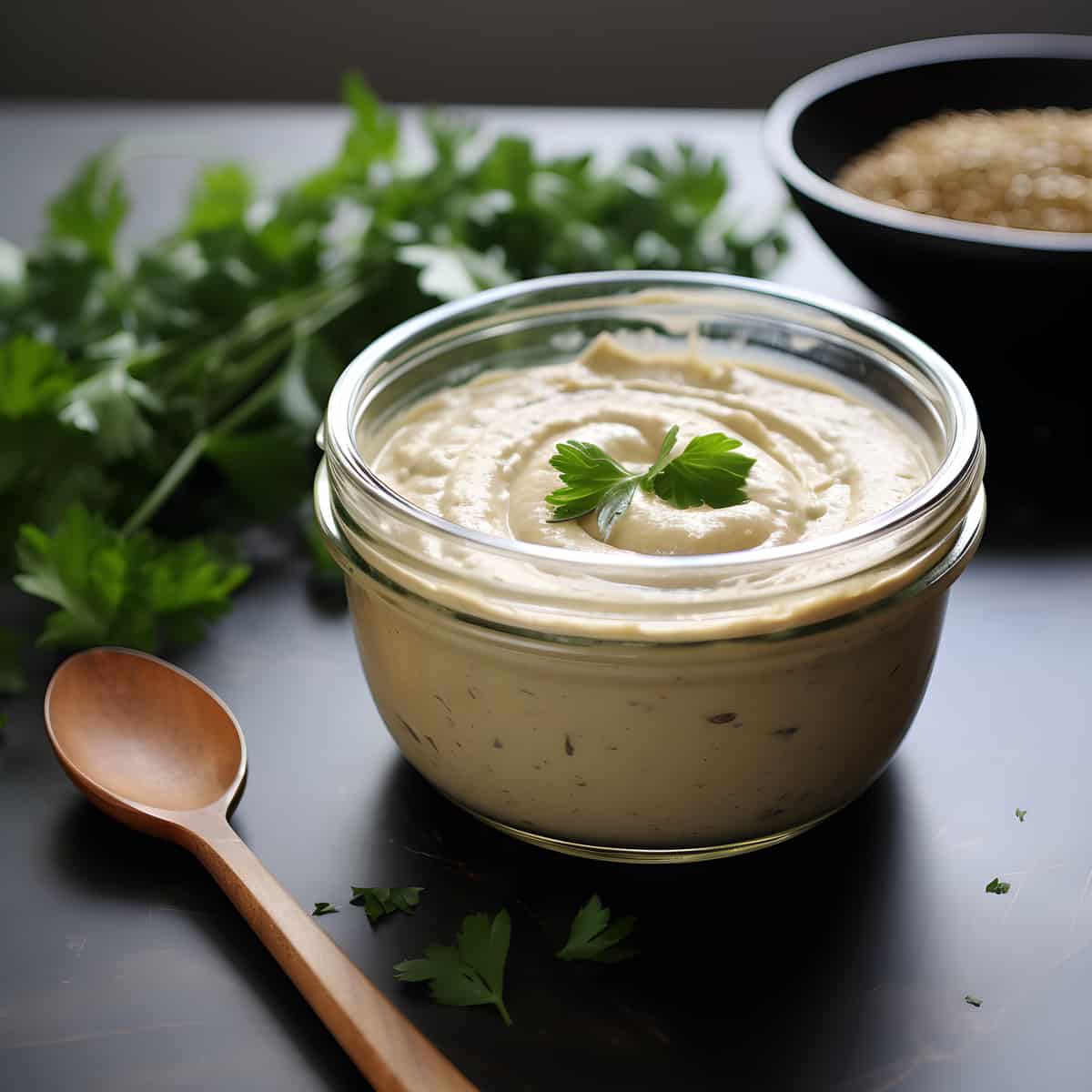
Tahini, a creamy paste made from sesame seeds, has found its way into the heart of many cuisines around the world.
But as keto diets gain popularity, folks are wondering if this delicious, nutritious ingredient can fit into a low-carb lifestyle.
Well, this article is here to clear up that puzzle once and for all.
We're going to dive into the carb count of Tahini, explore some tasty ways to incorporate it into your keto meal plan, and highlight the nutritional benefits of this versatile ingredient.
So, whether you're a seasoned keto veteran or just starting your journey, let's discover together why Tahini has earned its place in a keto-friendly pantry.
TL;DR
Is Tahini Keto-Friendly??
Undoubtedly, Tahini is keto-friendly. This creamy, nutty paste made from ground sesame seeds boasts a paltry 1.78g net carbs per 1 tablespoon serving (15g), fitting snugly into the framework of the ketogenic dietary regimen.
The core principle of the keto diet rests on the consumption of high-fat, moderate-protein, and extremely low-carb foods. The aim is to drive your body into a metabolic state known as ketosis, where it burns fat for energy instead of carbs. With a mere 1.78g net carbs in a 1 tablespoon serving, Tahini falls well within the low-carb spectrum, making it a suitable addition to a keto diet plan.
Can You Have Tahini on a Strict Keto Diet?
Absolutely, Tahini fits comfortably into even a strict keto diet. Remember, a strict keto diet typically involves consuming less than 20g of net carbs per day, and with Tahini's meager 1.78g net carbs per tablespoon, it can easily be incorporated.
Some individuals opt for a more lenient approach to the keto diet, often termed as low-carb dieting, where they restrict their net carbs intake to around 30-50g per day. The minimal carb content in Tahini makes it an equally viable option for these dieters too.
Carbs In Tahini
Tahini contains a minimal 1.78g of net carbs per 1 tablespoon (15g), a quantity that is comfortably suitable for a keto diet. Further, it's worth noting that Tahini has a low glycemic index of 40 [source]. The glycemic index is a measure of how rapidly a food causes blood sugar to rise. Foods are classified as low (55 or less), medium (56 to 69), or high (70 to 100) on the glycemic index, and a low score is beneficial for maintaining steady blood sugar levels. Foods with a lower GI digest slowly, leading to a steady rise in blood sugar levels, whereas foods with a high GI are quickly digested, causing a rapid spike.
Tahini Nutrition Facts
Tahini, in a portion size of 1 tablespoon (15g), is loaded with a variety of macro and micronutrients. It contains 1.78g net carbs, along with 2.55g protein and 8.064g total lipid (fat). Its carbohydrate content, by difference, stands at 3.1785g, with 1.395g fiber, and a minimal 0.0735g total sugars.
The energy value of Tahini is 89.25kcal, providing significant fuel for your body. It has a water content of 0.4575g. The saturated fatty acids total to 1.1294g, whereas, the monounsaturated and polyunsaturated fatty acids stand at 3.0453g and 3.5346g respectively.
Tahini also houses a range of essential vitamins and minerals. It contains 63.9mg calcium, 1.3425mg iron, 14.25mg magnesium, 109.8mg phosphorus, 62.1mg potassium, 17.25mg sodium, and 0.693mg zinc. Trace elements include 0.2415mg copper, 5.16µg selenium, and it is rich in B-vitamins like 0.183mg Thiamin, 0.0709mg Riboflavin, 0.8175mg Niacin, and 0.0223mg Vitamin B-6. It contributes 14.7µg folate to your diet and 3.87mg choline as well.
| Nutrient Name | Amount and Unit per 1 tablespoon (15g) |
|---|---|
| Net Carbs | 1.78g |
| Water | 0.4575g |
| Energy | 89.25kcal |
| Protein | 2.55g |
| Total lipid (fat) | 8.064g |
| Carbohydrate, by difference | 3.1785g |
| Fiber, total dietary | 1.395g |
| Total Sugars | 0.0735g |
| Calcium, Ca | 63.9mg |
| Iron, Fe | 1.3425mg |
| Magnesium, Mg | 14.25mg |
| Phosphorus, P | 109.8mg |
| Potassium, K | 62.1mg |
| Sodium, Na | 17.25mg |
| Zinc, Zn | 0.693mg |
| Copper, Cu | 0.2415mg |
| Selenium, Se | 5.16µg |
| Thiamin | 0.183mg |
| Riboflavin | 0.0709mg |
| Niacin | 0.8175mg |
| Vitamin B-6 | 0.0223mg |
| Folate, total | 14.7µg |
| Folate, food | 14.7µg |
| Folate, DFE | 14.7µg |
| Choline, total | 3.87mg |
| Vitamin A, RAE | 0.45µg |
| Carotene, beta | 6.0µg |
| Vitamin E (alpha-tocopherol) | 0.0375mg |
| Fatty acids, total saturated | 1.1294g |
| SFA 14:0 | 0.0201g |
| SFA 16:0 | 0.7211g |
| SFA 18:0 | 0.3393g |
| Fatty acids, total monounsaturated | 3.0453g |
| MUFA 16:1 | 0.0242g |
| MUFA 18:1 | 3.0068g |
| MUFA 20:1 | 0.0112g |
| Fatty acids, total polyunsaturated | 3.5346g |
| PUFA 18:2 | 3.4699g |
| PUFA 18:3 | 0.061g |
Health Implications of Tahini on a Keto Diet
Tahini is not just low in carbs; it's also a nutritional powerhouse. It's rich in essential minerals like calcium, iron, magnesium, and zinc. Additionally, it provides vital vitamins, such as Thiamin and Riboflavin. These nutrients can help support overall health and wellness, from promoting bone health to supporting energy production and much more.
Incorporating Tahini into Your Keto Meal Plan
- Tahini is an incredibly versatile ingredient, and there are numerous ways to incorporate it into a keto diet. One simple way is to use it as a dressing for salads or roasted vegetables, adding a creamy, nutty flavor that enhances any dish.
- Tahini can also be used in a variety of keto-friendly recipes. It can be mixed with garlic, lemon juice, and herbs to make a flavorful sauce for grilled meats or used as a base for a low-carb hummus.
Keto-Compatible Alternatives for Tahini
- Almond Butter: Almond butter can be a great alternative to Tahini. It has a similar consistency and is also rich in healthy fats. It can be used in many of the same recipes as Tahini, for instance, as a spread on keto bread or mixed into a low-carb smoothie.
- Sunflower Seed Butter: Low-carb and high in essential nutrients, sunflower seed butter could be a suitable substitute for Tahini. Its unique flavor can add a twist to your traditional keto recipes. It works well when added to a protein shake or used as a salad dressing.
- Coconut Butter: Although it has a distinct flavor, coconut butter can be a suitable alternative to Tahini on the keto diet. Its high-fat content aligns well with the requirements of a ketogenic diet.
Concluding Thoughts on Tahini and Keto
Tahini, with its low-carb profile and rich nutritional composition, indeed proves to be a keto-friendly food. Its minor count of 1.78g of net carbs per tablespoon allows it to fit easily into a ketogenic diet, even the stricter versions that limit daily carb intake to less than 20g.
The nutritional benefits of Tahini, which include essential minerals and vitamins, further enhance its appeal for health-conscious individuals on a keto diet. However, keeping an eye on portion sizes and total daily carb intake remains crucial, given its relatively high total fat content.
Incorporating Tahini into your keto meal plan can be an enjoyable culinary journey. From adding it as a salad dressing to using it as a base for low-carb hummus, the possibilities are abundant.
Cast Iron Keto's Editorial and Research Standards
Certain rare or exotic food items may not have nutritional profiles in the FoodData Central database. If an exact match is not found in the FoodData Central database, then, the Cast Iron Keto team utilizes a three-prong approach to provide readers with the closest relevant nutritional data, where possible.
First, in the event that nutritional profiles for a rare or exotic food item is not available in the FoodData Central database, we investigate alternative names for that particular food item and use that data, when possible. Second, in cases where no alternate names exist, Cast Iron Keto will use nutritional data for a close relative or similar food item. Finally, if no close relatives or similar items exist, we refrain from publishing nutrient data tables.
When making dietary or health decisions based on FoodData Central's data, we suggest readers consult with a nutritionist or other health experts, particularly if the food in question has a significant role in your diet or if you are using the food item to treat any health disorder(s).
Furthermore, it is important to note that even if a close relative or similar item is used to approximate the nutritional data, different food items can have varying levels of nutrients due to factors such as soil quality, farming practices, and regional differences.
Disclaimer:
The information on this website is only intended to be general summary information for public use, designed for educational purposes only and is not engaged in rendering medical advice or professional services. This information does not replace written law or regulations, nor does it replace professional medical advice, diagnosis, or treatment. If you have questions about a medical condition or are seeking to evaluate the health merits of certain food items for the treatment of any medical condition, you should seek the advice of a doctor or other qualified health professionals.
The views expressed at, or through, Cast Iron Keto are for informational purposes only. Cast Iron Keto cannot guarantee the validity of the information found here. While we use reasonable efforts to include accurate and up-to-date information, we make no warranties as to the accuracy of the content and assume no liability or responsibility for any errors or omissions in the content. All liability with respect to actions taken or not taken based on the contents of this website are hereby expressly disclaimed. The content on this posting is provided "as is;" no representations are made that the content is error-free.